Your strategy isn’t the problem. Your leadership team might be.

Each month, we bring our executive Communities together for a virtual event focusedon a specific business challenge. When our Client Partner, Stuart Williamson, hosted our recent event on High Performing Teams, we expected the discussion to centre on trust, collaboration and leadership behaviours. It did. What perhaps surprised people was where the conversation started. Not with people, but with execution.
Our Intelligent Enterprise research found that more than 90% of senior leaders believe they have a clear strategy, yet only 7% consistently realise the full value of their transformation programmes. On average, organisations estimate that more than a quarter of expected value is lost between ambition and delivery.
Those numbers prompt an important question. If organisations are confident in their strategy, where does the value disappear?
Strategy isn't where most organisations fall short
There isn't a single answer. Markets change, priorities shift and transformation is rarely linear. Yet after working alongside leadership teams across multiple sectors, we've reached a consistent conclusion. The biggest constraint on execution is often not the strategy itself, but the way the leadership team operates.
That may sound uncomfortable, but it reflects a pattern we see repeatedly. Organisations invest significant time refining strategy, governance and delivery plans, while spending comparatively little time understanding how the leadership team makes decisions together, resolves disagreement or builds trust. Those behaviours are harder to measure, yet they have an extraordinary influence on whether change succeeds.
The behaviours that quietly undermine performance
Patrick Lencioni's The Five Dysfunctions of a Team has remained relevant for more than two decades because it describes behaviours that still feel familiar in boardrooms today. Teams rarely fail because people lack capability. More often, they struggle because:
- difficult conversations are avoided
- decisions remain ambiguous
- accountability becomes something leaders expect from others rather than something they practise together
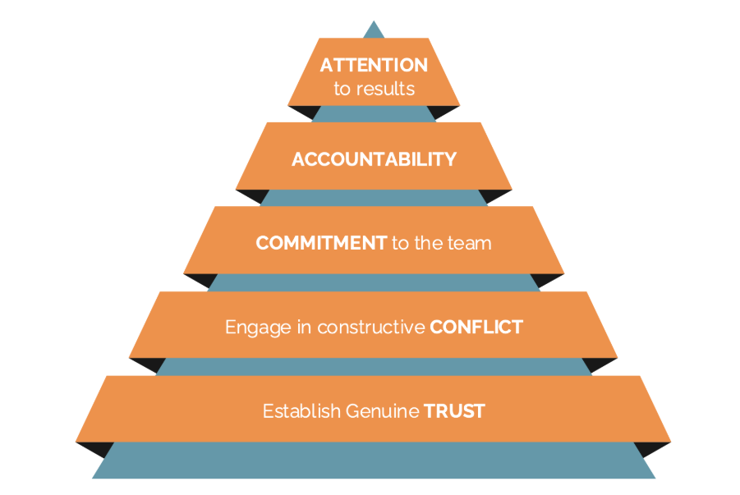
The framework gives language to behaviours that many executives recognise instinctively, even if they have never articulated them.
Trust is more practical than most leaders think
One theme that generated particularly rich discussion during the session was trust.
Trust is often treated as a cultural aspiration, something organisations hope to build through time or shared experience. In practice, it is far more tangible than that. David Maister's Trust Equation reminds us that trust is shaped by credibility, reliability, intimacy and, perhaps most importantly, the degree to which people believe others are acting in the interests of the team rather than themselves.
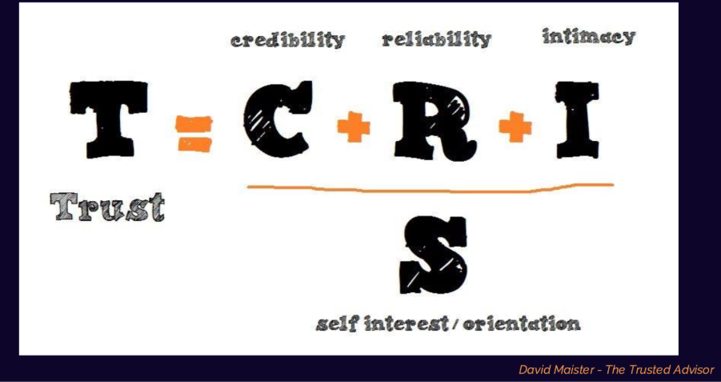
That final point deserves more attention than it often receives.
Most leadership teams contain highly capable individuals with strong functional expertise. What distinguishes the highest performing teams is not that they are more experienced, but that they spend less energy protecting their own position and more energy pursuing the best collective outcome. They are prepared to challenge ideas without questioning intent. They ask for help before problems become critical. They are comfortable admitting uncertainty because they know vulnerability strengthens, rather than weakens, collective decision-making.
Looking below the surface
Another idea that resonated strongly was the iceberg analogy we explored during the workshop. We see only a small proportion of the people we work alongside every day. Beneath the surface sit the experiences, motivations, assumptions and communication preferences that shape how decisions are made and how conflict is interpreted.
When leadership teams fail to understand those hidden dynamics, they often diagnose the wrong problem. They redesign governance, introduce new reporting structures or launch another transformation initiative, when the real issue lies in how the team itself is working together.
High performance is built, not assumed
None of this suggests that high performing teams emerge simply because people are willing to be open with one another. Trust without accountability quickly becomes complacency. Equally, accountability without trust usually creates compliance rather than commitment. The strongest teams develop both, creating an environment where challenge is expected, decisions are clearer and responsibility is genuinely shared.
These conversations matter because execution is ultimately human. Technology will continue to reshape how organisations operate, AI will change how work gets done and strategies will continue to evolve, but none of those things remove the need for leadership teams that can think clearly together, challenge constructively and align behind difficult decisions. In many organisations, that remains the greatest opportunity to improve transformation outcomes.
Continue the conversation
If these questions feel familiar, you're certainly not alone. They are the reason we work with leadership teams in the first place. Our High Performing Teams workshops create the space to explore these dynamics honestly, using real business challenges rather than theoretical exercises, so leadership teams leave with greater alignment, stronger relationships and, ultimately, a better chance of turning strategy into results.
If you're wrestling with similar questions in your own organisation, we'd love to hear from you.

Ricky Wallace
Head of Marketing