Inner Circle: CFOs and COOs in Conversation

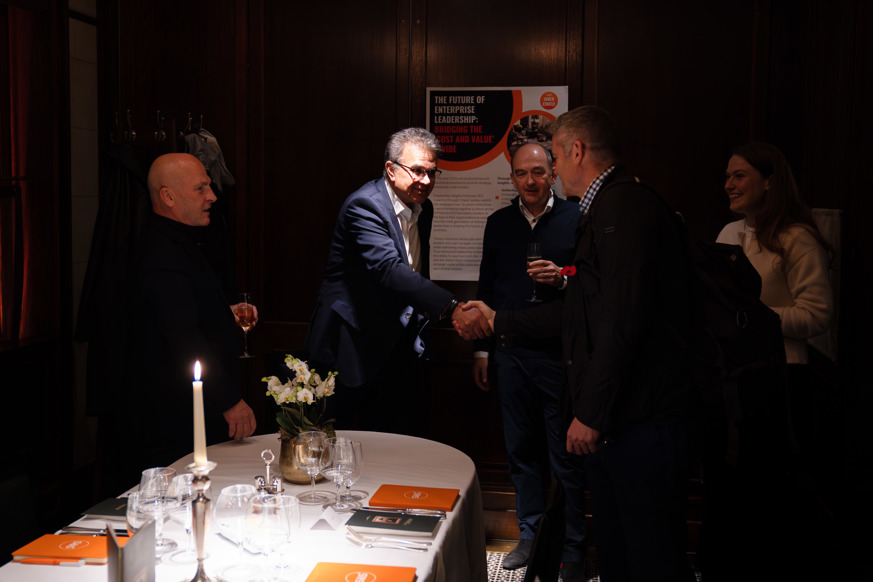
On November 12th, our Inner Circle Community for Chief Finance and Operating Officers gathered at The Delaunay for our first dinner of this kind, an evening of open conversation about the realities of leading transformation at the executive level.
The group brought diverse backgrounds, spanning financial services, insurance, manufacturing, pharmaceuticals and technology, but shared common challenges around balancing short-term performance with long-term capability building.
The CFO/COO partnership
The discussion proved our hypothesis: the partnership between CFOs and COOs can either enable or constrain transformation.
When working well, the dynamic becomes complementary. A member described it as "the left and right arm of the CEO": both essential, neither more important. The CFO holds financial discipline whilst the COO drives operational change, and when they align on vision and execution, they can translate ambitious strategy into reality.
But this requires shared accountability rather than territorial thinking. Several in the room had experienced the opposite: constant friction where the CFO's focus on quarterly numbers clashed with the COO's need to invest in capability that would pay back over years, not quarters.
A COO shared a specific example, implementing a continuous improvement function that the CFO wanted to eliminate after a year because it hadn't yet delivered benefits equal to its cost. "Investment in that kind of capability is medium to long-term. If you don't have that horizon in your head, there's no point attracting talent to do it and just giving them a year to prove themselves."
Technology: Tool, not solution
The conversation around AI and technology was particularly grounding and echoed what we are hearing on the frontlines with our clients. There was clearly some scepticism about whether AI was living up to its hype in operational contexts, so we created space to learn from each other about what's genuinely working versus what's still just promise
The consensus that emerged: get your processes right first. If you can't map a process clearly on paper or in a spreadsheet, adding technology, no matter how sophisticated, will only amplify the confusion.
A leader with experience in robotic process automation since 2013 put it bluntly: "AI is just a buzzword. If you can't get your processes right on an Excel spreadsheet or on a piece of paper, you can see a clear line of sight, AI won't crack it open. AI isn't intelligence. AI is what you tell it to do."
The practical approach that resonated across the group: build the new factory rather than trying to transform the old one. Prove the concept in a small, contained environment – maybe one country, one product line, one team – then scale once you've demonstrated value. Several leaders had learned this lesson the hard way.
Another Community member shared their approach at a previous organisation: "We set up the first shared services and started with one market because I was connected to it. Then the next step was getting other regions to adopt it. It took a long time but I convinced a sceptical regional leader to come and see what we were doing. They realised it could actually work and were convinced by seeing it in action."
Leading through daily disciplines
A recurring theme throughout the evening was the importance of daily rhythms and rituals in building high-performing teams.
Multiple leaders described using daily stand-ups or huddles: short, focused morning sessions where teams align on priorities, surface blockers and build accountability. A COO runs a 9:15-9:30 session every morning, "People are now turning up early. You finish at 9:30. And then we have structure. Every day has a focus. Monday is finance day, Tuesday is programmes. They all feel like they have dedicated time, everyone's centred on them, and they're driving it forward."
This isn't just about operational efficiency. It's about creating conditions where teams feel valued and capable. The fundamentals of good leadership matter: getting people's names right, understanding what motivates them, demonstrating calm in crisis. These classical leadership behaviours set the tone for how teams experience transformation.
Investing in yourself
Several leaders in the room had deliberately chosen roles for learning over compensation at various points in their careers. This pattern of calculated risk-taking and continuous learning emerged as a marker of effective leadership—risk tolerance and eagerness to learn often distinguish leaders who sustain impact across decades.
An attendee shared taking a role at a major financial services firm specifically to build technical capabilities: "I went from running a large team into a highly technical space. I focused on infrastructure, Cloud, the whole works. That was three years of investment in myself. I classed it as one of the best paid MBAs."
Another described rotating every 18-24 months within the same organisation over 20 years, doing 13 different jobs: "The only reason I agreed to go back to retail ops was if I could transform back office. I didn't want to do more of the same. Most people don't like it – you stick your neck out and take the riskiest portfolio. But it builds your own resilience and gives you the ability to take a step back."
This pattern of calculated risk-taking and continuous learning emerged as a common thread amongst those who'd sustained impact across decades. Mobility matters. Diverse experience across functions, sectors and geographies builds capabilities that compound over time.
The reality of resilience
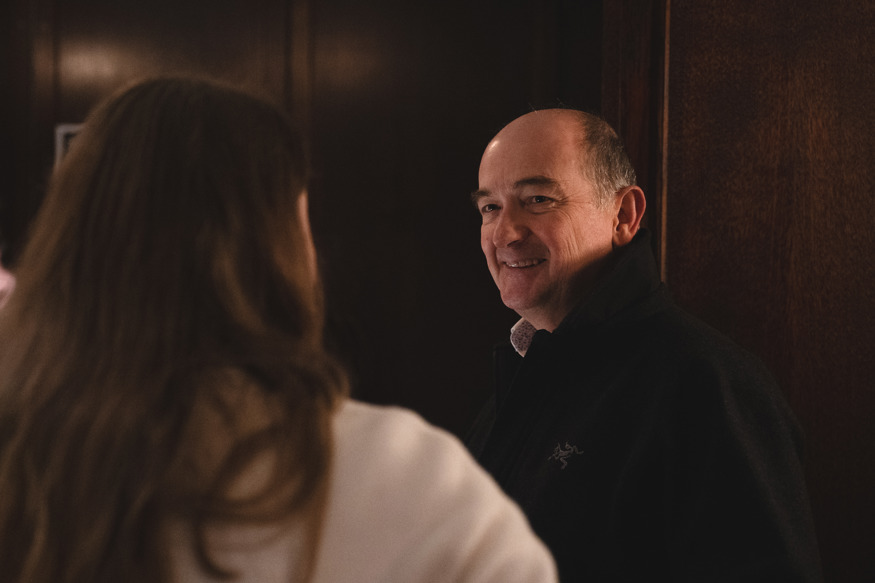
The conversation touched on what it takes to maintain composure in high-pressure situations, what one leader called "Radio 4 calm.” Is resilience innate or learned? The room was split, but the weight of experience suggested it's cultivated through repeated exposure to difficult situations.
An Inner Circle member with a military background described their approach: "I always think business is a bit like counterinsurgency. You're having to operate three or four steps ahead of everyone else in the ExCo, anticipate everyone's moves and be prepared for any action. I will never throw anyone under the bus, but I've been purposely thrown under the bus in front of Board and ExCo and their own teams countless times. You always have a deck ready and you're always ready to walk in confident because you anticipate the worst."
Another shared leading a team through a regulatory crisis, where the regulator essentially gives you months to fix critical issues or face shutdown: "I thought, ‘I've never taken over a business before that's already in this situation’. That was probably the most risky scenario. But you've got to lean in hard for that first six months. You grip the teams with intent, with confidence, even though probably they know more than you at the beginning."
The ability to walk into chaos and project calm isn't about personality. It comes from having been through multiple difficult situations and knowing you've survived them before.
Communities and connection
Towards the end of the evening, the conversation turned to why communities like this matter.
A participant referenced research on Blue Zones – regions where people live longest – and how the common factor isn't diet or exercise but social connection: "Do you know the name of the person that you buy the bread from? When you go to the petrol station, do you know their name? I make an effort to know people. Those connections potentially make you live longer, more than the fact that you eat well, because those people will look after you."
The parallel to professional communities was clear. Having peers who understand what you're really dealing with, who have navigated similar challenges, provides both practical insight and emotional support.
As one COO put it: "These conversations remind us why we're building communities where executives can be honest about the real challenges of leadership – not the sanitised version we present in board packs."
Looking ahead
The Inner Circle is Sullivan & Stanley's community for CFOs and COOs, providing a space for senior finance and operations leaders to connect, challenge each other and explore the real challenges of leading transformation. Through intimate dinners and focused discussions, members gain insights they can't find elsewhere whilst building a network of peers who understand what they're really dealing with.
The Inner Circle will continue to convene throughout 2026, bringing together CFOs and COOs to explore the practical realities of bridging strategy and execution. If you're interested in joining future discussions, learn more about the Inner Circle Community.